Balance the imbalance

Immunoglobulins …

… are essential components of the immune system. They regulate and modulate various defense mechanisms that promote an adequate immune response.1,2

Three main classes of immunoglobulins …

… can be found circulating in human plasma: IgM, IgG and IgA, each with distinct characteristics.3

IgM Icon IgG Icon IgA Icon
Structure Pentamer Monomer Monomer/Dimer
Molecular
weight
900 kDa 150 kDa 160/320 kDa
Function Primary
response
Secondary
response
Mucosal
response
IgM Icon
IgM is the first antibody produced during an infection.4

IgM agglutinates pathogens.5

IgM is the strongest activator of the complement system which results in a rapid and effective immune response.1

IgM has a modulatory effect on the complement system.6

It binds and neutralizes inflammatory factors and bacterial toxins.1,7
IgM Icon
IgG is the predominant immunoglobulin class in blood.3

It plays an important role in the opsonization of pathogens and activation of phagocytosis.3

IgG can activate the classical pathway of the complement system.3
IgM Icon
IgA is the predominant immunoglobulin class in the mucosa.8

It task consists of agglutination and opsonization of pathogens.8

It also influences the modulation of immune cell functions.8

Table: The three main types of immunoglobulins and their role in immune response. Modified from Schroeder et al. 20103

The immunoglobulins IgD and IgE (which have very specific functions in the immune system), are present in very low levels in plasma and make up approximately 0.1% of the total immunoglobulin content.9

IgM immunoglobulins …

… are the first line of defense against pathogens and act as modulators to control immune response mechanisms and to maintain homeostasis.1,2

IgM antibodies balance the immune system
  • by activation of the complement system which results in rapid and effective immune response1
  • by modulation of the complement system6
  • by binding and neutralization of inflammatory factors and bacterial toxins1,7
  • by agglutination of pathogens5

Low levels of immunoglobulins …

… are associated with reduced survival in sepsis.10
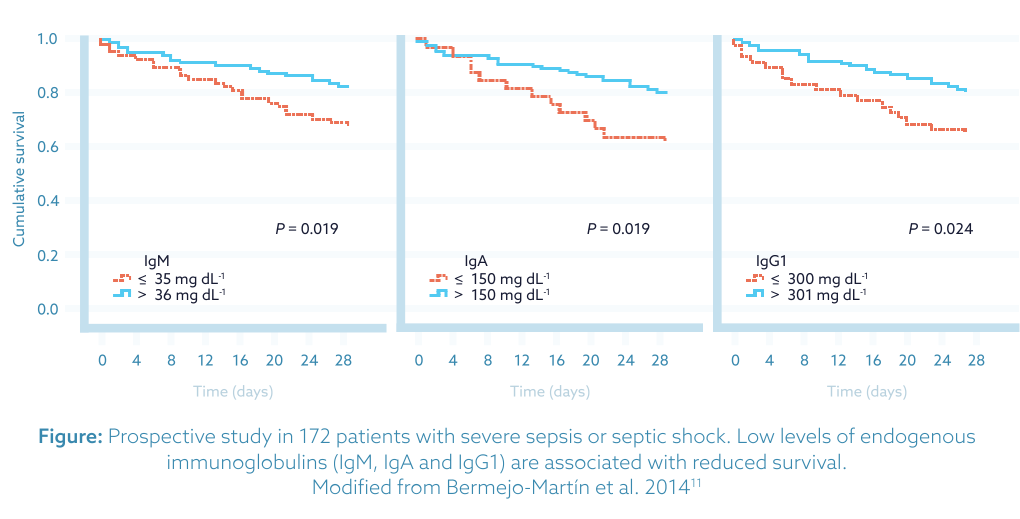
Immunoglobulins should be measured at the beginning and during the course of sepsis in order to assess the patients’ prognosis, monitor the disease status and decide upon the best therapeutic strategy.10

Pentaglobin® …

… is a human IgM-enriched immunoglobulin preparation for the adjunctive treatment of severe bacterial infections. Therapy with intravenous immunoglobulins in addition to antibiotic therapy can help to regain immunological control and improve the patients’ outcome.12,13

In comparison to STANDARD IMMUNOGLOBULINS (IVIG) …

… which almost exclusively contain IgG antibodies, Pentaglobin® is composed of 12% IgM, 12% IgA and 76% IgG, an amount comparable to the amount in the blood serum of healthy human individuals.3,13

IgM Icon IgG Icon IgA Icon
Serum3 10% 75% 15%
Pentaglobin® 12% 76% 12%
Standard IVIG <1% >95% <1%

Table: The immunoglobulin content of Pentaglobin® compared to standard IVIG and human blood serum.

Adjunctive therapy with Pentaglobin® can increase all 3 immunoglobulin classes (IgM, IgA and IgG) to a normal level13 and support sepsis patients in rebalancing the dysregulated immune system.

Which sepsis patients will benefit from Pentaglobin® therapy?

According to expert opinion  there are two groups of patients  which would benefit most from the use of Pentaglobin®.6

Patients in a hyper-inflammatory state:

Acute disease onset, showing signs of heavy inflammation and the risk of developing septic shock.

Clinical examples

Clinical phenotype

  • Meningococcal sepsis
  • Toxic shock syndrome (TSS)
  • Necrotizing fasciitis
  • Severe community acquired pneumonia (sCAP)
  • Shock index (abnormal shock index ≥0.7)
  • Laboratory evidence of hyperinflammation (e.g. high values for PCT, IL-6, CRP)
  • Markers for septic shock: serum lactate, arterial pressure <65 mm Hg

Patients in an immunosuppressive state:

Immunocompromised, often with a long intensive care unit (ICU) stay, and a higher incidence of nosocomial infections.

Clinical examples

Clinical phenotype

  • Patients with recurrent nosocomial bacterial infections
  • Patients with an inability to clear primary focus of infection
  • Multi-morbid elderly patient (diabetes mellitus, liver disease, renal insufficiency, malnutrition)
  • Persistent septic shock with ≥2 organ 
    dysfunctions after initial resuscitation (expert opinion)
  • Persistent immunosuppression, e.g. high
    PD-1, lymphopenia, low IgM level, low HLA-DR expression on monocytes, expansion of MDSCs (expert opinion)
  • Increased susceptibility to secondary 
    infections in the blood and lung

Table: Sepsis patients who may benefit from the treatment with Pentaglobin®. Modified from Nierhaus et al. 20206

Early administration of Pentaglobin® …

… is associated with decreased risk of in-ICU mortality, as shown in a retrospective study with 355 patients with septic shock.14

Heavily inflamed sepsis patients with an acute disease onset should be treated as early as possible with Pentaglobin® and immunosuppressed patients with severe sepsis or septic shock, often with a long ICU stay and with nosocomial infections, require early infusion, experts say.6

a meta-analysis …

… evaluating the efficacy of IgM-enriched immunoglobulins in adult patients with sepsis and septic shock (19 studies, 1,530 patients), showed that the intravenous administration of human IgM-enriched immunoglobulins significantly reduced mortality from sepsis and septic shock.15
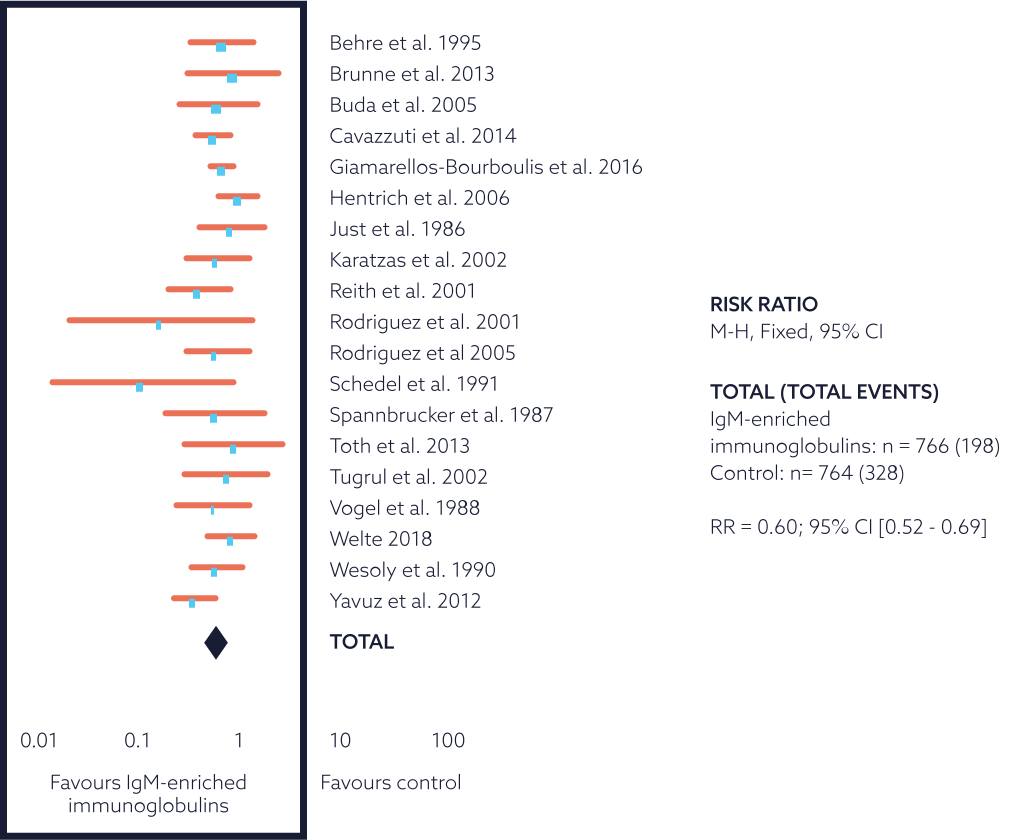
Figure: Forest plot showing the overall effect of IgM-enriched immunoglobulins on mortality. Modified from Cui et al. 201915

Treatment with Pentaglobin® can reduce mortality in sepsis patients by supporting the restoration of a normal immune function and the balance of pro- and anti-inflammatory processes. The adjunctive administration of Pentaglobin® in patients with acute, severe bacterial infections represents a promising therapeutic option, which can contribute not only to anti-bacterial activity but also to modulation of inflammatory processes.6,15

References:

1 Panda S, Ding JL. Natural antibodies bridge innate and adaptive immunity. J Immunol. 2015;194(1):13 – 20.
2 Maddur MS, et al. Natural Antibodies: from First-Line Defense Against Pathogens to Perpetual Immune Homeostasis. Clin Rev Allergy Clin Immunol. 2020;58(2):213 – 228.
Schroeder JHW, Cavacini L. Structure and function of immunoglobulins. J Allergy Clin Immunol. 2010;125(2 Suppl 2):S41 – 52.
4 Liu J, et al. Role of the IgM Fc Receptor in Immunity and Tolerance. Front Immunol. 2019;10:529.
5 Busani S, et al. Intravenous immunoglobulin in septic shock: review of the mechanisms of action and meta-analysis of the clinical effectiveness. Minerva Anestesiol. 2016;82(5):559 – 572.
6 Nierhaus A, et al. Best-practice IgM- and IgA-enriched immunoglobulin use in patients with sepsis. Ann Intensive Care. 2020;10(7):132.
7 Wand S, et al. IgM-Enriched Immunoglobulin Attenuates Systemic Endotoxin Activity in Early Severe Sepsis: A Before-After Cohort Study. PLoS ONE. 2016;11(8):e0160907.
8 Bohländer F. A new hope? Possibilities of therapeutic IgA antibodies in the treatment of inflammatory lung diseases. Frontiers in Immunology. 2023;1 – 17.

9 Murphy KM, Travers P, Janeway WM. Immunologie. Springer Spektrum, 9th edition.
10 Bermejo-Martín JF, Giamarellos- Bourboulis EJ. Endogenous immunoglobulins and sepsis: New perspectives for guiding replacement therapies. Int J Antimicrob Agents. 2015:46Suppl1:25 – 28.
11 Bermejo-Martín JF, et al. Immunoglobulins IgG1, IgM and IgA: a synergistic team influencing survival in sepsis. J Intern Med. 2014;276(4):404 – 412.
12 Jarczak D, et al. Use of Intravenous Immunoglobulins in Sepsis Therapy—A Clinical View. Int J Mol Sci. 2020;21(15):5543.
13 Pentaglobin®. Summary of Product Characteristics.
14 Berlot G, et al. Effects of the timing of administration of IgM- and IgA-enriched intravenous polyclonal immunoglobulins on the outcome of septic shock patients. Ann Intensive Care. 2018;8(1):122.
15 Cui J, et al. The clinical efficacy of intravenous IgM-enriched immunoglobulin (pentaglobin) in sepsis or septic shock: a meta-analysis with trial sequential analysis. Ann Intensive Care. 2019;9(1):27.